The weirdest animal facts usually have a practical reason
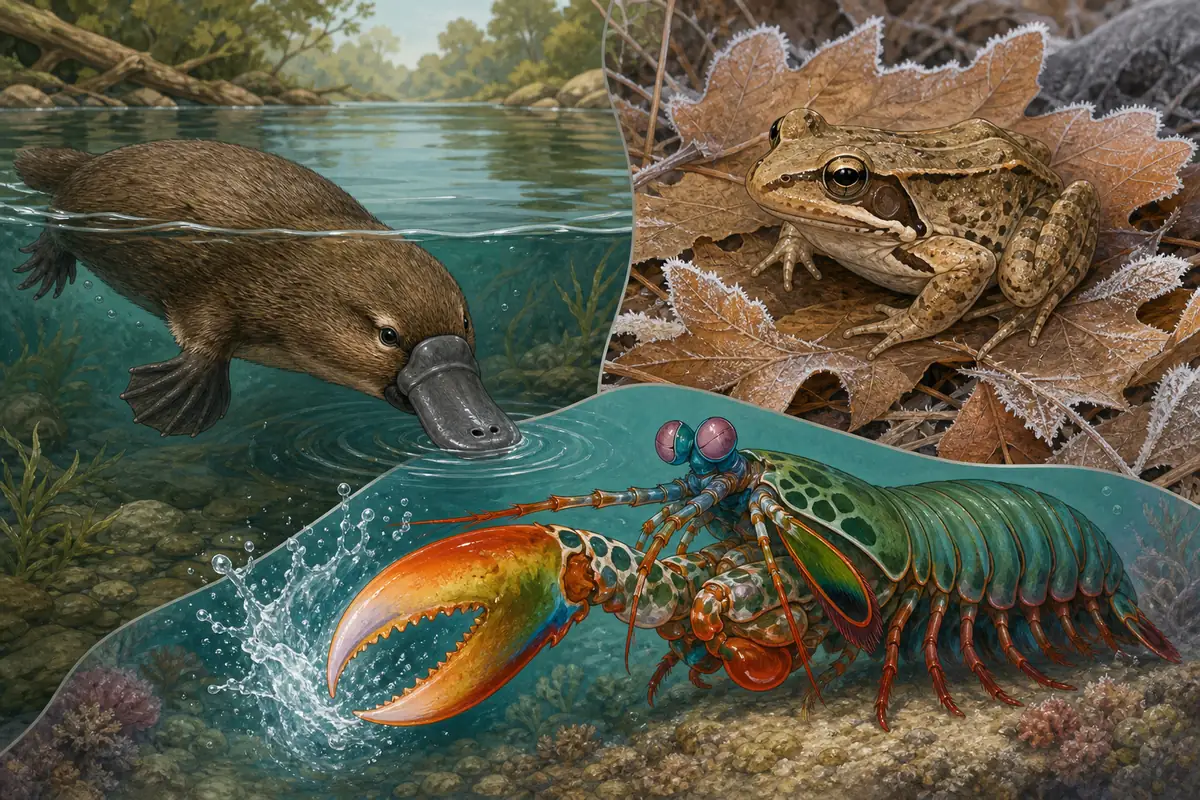
The short answer: weird animal facts become memorable when you connect the strange detail to a survival problem. A platypus bill can sense electrical signals because muddy water hides prey. A wood frog can tolerate partial freezing because winter leaves no easier escape. A wombat's cube-shaped droppings help scent markers stay where they are placed.
Use this article as a verified idea bank for classrooms, drawing prompts, writing warm-ups, and family trivia. Each fact names the animal, explains what is unusual, and adds a caveat where the internet version is often oversimplified.
Weird animal facts at a glance
Start with these examples if you need a fast answer. The full sections below explain the mechanism and the limitation behind each claim.
| Animal | What makes it weird | Theme |
|---|---|---|
| Platypus | Detects tiny electrical signals from prey with receptors in its bill. | Sense |
| Wood frog | Survives seasonal partial freezing with protective chemicals in body tissues. | Survival |
| Wombat | Produces cube-shaped droppings that help scent marks stay in place. | Body design |
| Mantis shrimp | Strikes so fast that collapsing bubbles can add a shock effect. | Movement |
| Honeybee | Uses a waggle dance to communicate direction and distance to food. | Behavior |
5 weird animal facts about strange senses
These animals notice signals people usually miss, from electric fields to tiny timing differences in sound.
Platypus
A platypus often hunts with its eyes, ears, and nostrils closed underwater. Electroreceptors and touch receptors in the bill help it find moving prey in cloudy water.
Shark
Many sharks detect weak electrical fields through sensory pores called ampullae of Lorenzini. This does not make them supernatural; it helps locate nearby animals at close range.
Barn owl
A barn owl's ear openings are unevenly placed. The brain compares tiny arrival-time differences so the owl can locate prey in dim light.
Sea turtle
Young sea turtles respond to Earth's magnetic field and can use it as part of a map during ocean travel. The cue is useful, but it works with currents, light, and inherited behavior.
Jumping spider
Jumping spiders have unusually sharp vision for their size. Their large front eyes help judge distance before a leap, while side eyes monitor movement.
5 weird facts about animal survival
Some animals endure cold, dryness, pressure, or injury in ways that sound exaggerated until the conditions are defined carefully.
Wood frog
A wood frog can survive winter with ice forming outside many cells and with its heart stopped for a time. Glucose and urea help protect tissues until thawing restarts normal activity.
Tardigrade
Some tardigrades enter a dry tun state with metabolism slowed dramatically. They can survive extremes in that state, but active tardigrades still need suitable moisture and food.
Axolotl
Axolotls can regenerate limbs and repair some tissues with less scarring than mammals. That ability is remarkable, but it does not mean injuries are harmless.
Greenland shark
Greenland sharks can live for centuries according to age estimates from eye-lens tissue. The exact age of one animal has uncertainty, but the species is still exceptionally long-lived.
Emperor penguin
A male emperor penguin can incubate a single egg through Antarctic winter while fasting. The chick survives because the egg is balanced on the feet under a warm brood pouch.
5 weird animal body facts
Odd anatomy usually looks less random when you ask what job the body part performs.
Octopus
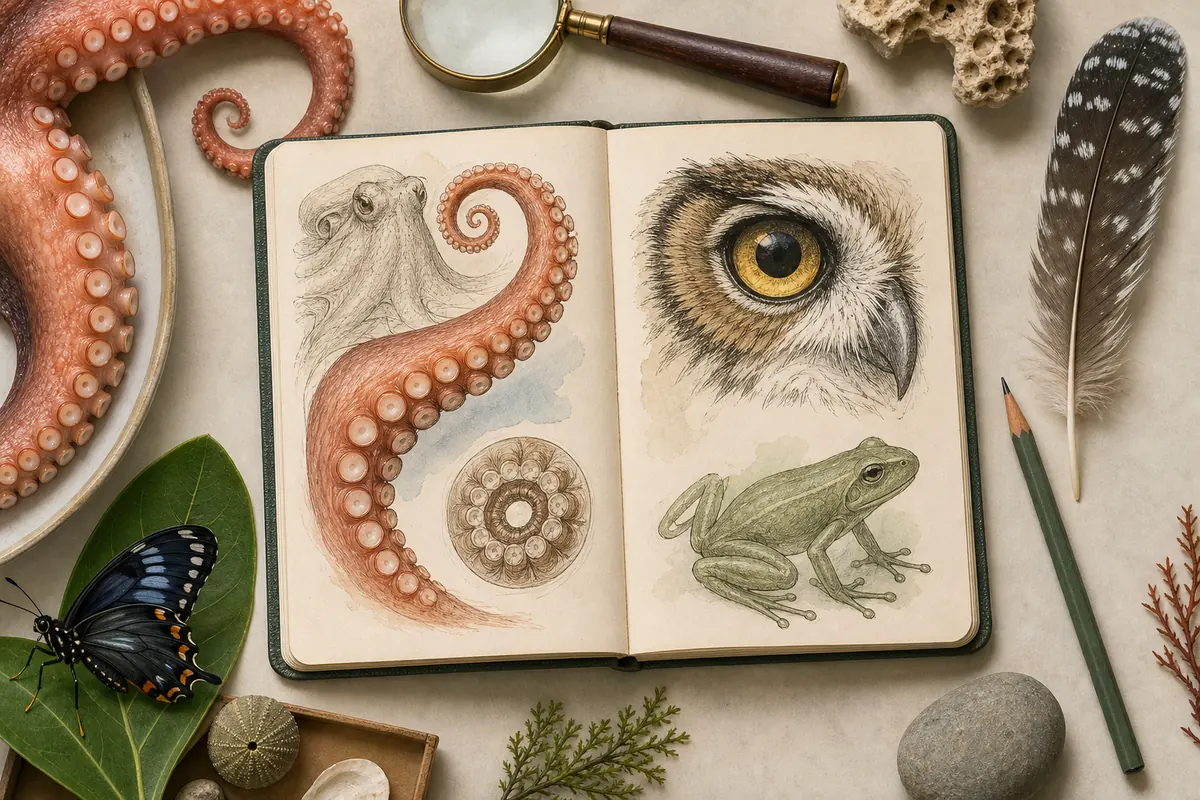
An octopus has three hearts: two move blood through the gills and one pumps it to the body. Its blue-looking blood uses copper-based hemocyanin for oxygen transport.
Wombat
Wombats produce cube-shaped droppings. Research points to differences in elasticity along the intestine, and the shape may help scent marks stay on rocks or logs.
Narwhal
A narwhal tusk is an elongated tooth, most often the upper left canine of a male. It is packed with nerve pathways and may help sense seawater changes.
Giraffe
A giraffe's long neck requires high blood pressure and specialized circulation. Vessel structure and pressure-control features reduce risk when the animal raises or lowers its head.
Flamingo
Flamingos are not born bright pink. Pigments from algae and small crustaceans are processed into feathers, skin, and beak color, so diet matters.
5 weird facts about animal behavior
Animal behavior can seem theatrical, but most examples below communicate, defend, hunt, or solve a habitat problem.
Honeybee
A honeybee's waggle dance can indicate food direction and distance. The angle relates to the sun's position, and the duration helps communicate how far away the source is.
Clownfish
Clownfish groups are organized around a dominant female. If she disappears, the breeding male can become female and another fish can mature into the male role.
Dolphin
Bottlenose dolphins produce individually distinctive signature whistles. Researchers often compare them to names because they can signal individual identity.
Bombardier beetle
Bombardier beetles mix stored chemicals in a reaction chamber and eject a hot defensive spray. The separated storage prevents the reaction from happening too early.
Albatross
Large albatrosses cross wind layers and gain energy through dynamic soaring. That is why they can travel long distances with little flapping.
5 weird facts about sea animals
Sea animals often feel especially strange because water changes pressure, oxygen, sound, and movement.
Mantis shrimp
Some mantis shrimp strike prey with club-like limbs that accelerate extremely quickly. The strike can create cavitation bubbles that add a second impact.
Humpback whale
Male humpback whales sing long, changing songs on breeding grounds. Song patterns can spread through a population, which makes the behavior cultural as well as biological.
Sea otter
Sea otters use stones as tools to open shellfish and may keep a favored stone in a loose skin pocket under the forearm.
Cuttlefish
Cuttlefish can change skin color and pattern quickly using specialized pigment and reflecting cells. The display supports camouflage, signaling, and hunting.
Arctic tern
The Arctic tern makes one of the longest known annual migrations. Its route is not a simple straight line, so yearly distance estimates depend on tracking method.
How to check whether a weird animal fact is actually true
Before sharing a claim, look for the exact species, the measurement method, and the original caveat. Weird facts are often damaged when a specific observation becomes a universal statement.
- 1
Name the exact animal
Replace broad labels such as frog, shark, or owl with the species whenever the source provides one.
- 2
Check the mechanism
A good fact explains how the adaptation works, not only that it exists.
- 3
Keep the limitation
Words such as some, may, estimated, in captivity, or during winter are often essential.
- 4
Prefer expert sources
Use museums, universities, zoos, aquariums, conservation agencies, government science pages, or research papers before viral captions.
How to use weird animal facts in class, art, and writing
For learning, turn one fact into a cause-and-effect question: What problem does this adaptation solve, and what would happen if the habitat changed?
For creative work, pair this page with the site's animal randomizer or drawing generator. Pick a real animal, keep one verified adaptation intact, and clearly label any imagined extension as fiction.
- Science warm-up: explain the mechanism in one sentence.
- Drawing prompt: sketch the body part that makes the fact possible.
- Writing prompt: build a scene where the adaptation solves a problem.
- Trivia game: give the mechanism first and ask players to identify the animal.
- Fact-check task: compare a viral claim with an expert source.
Weird animal facts FAQ
What is the weirdest animal fact?
There is no single winner, but the platypus using electroreception, the wood frog surviving partial freezing, and the wombat producing cube-shaped droppings are strong examples because each sounds strange and has a clear biological explanation.
Are weird animal facts for kids always safe to use?
Most are fine when the detail is age-appropriate. For younger kids, choose visible adaptations such as hummingbird flight, butterfly taste receptors, or flamingo color, and avoid graphic defense or injury details.
What are weird facts about sea animals?
Octopuses have three hearts, mantis shrimp strikes can create cavitation bubbles, sea otters use tools, and humpback whales share changing song patterns. Each claim needs species and context.
Why do animal facts online become misleading?
Short posts often remove caveats. A fact may apply only to one species, one life stage, one season, or one measured behavior, but social captions can repeat it as a rule for every animal in the group.
Can I use these facts with the random animal generator?
Yes. Generate an animal, research one verified adaptation, then use that detail as a drawing, classroom, or writing constraint.