An animal home is one place; a habitat is the bigger living system
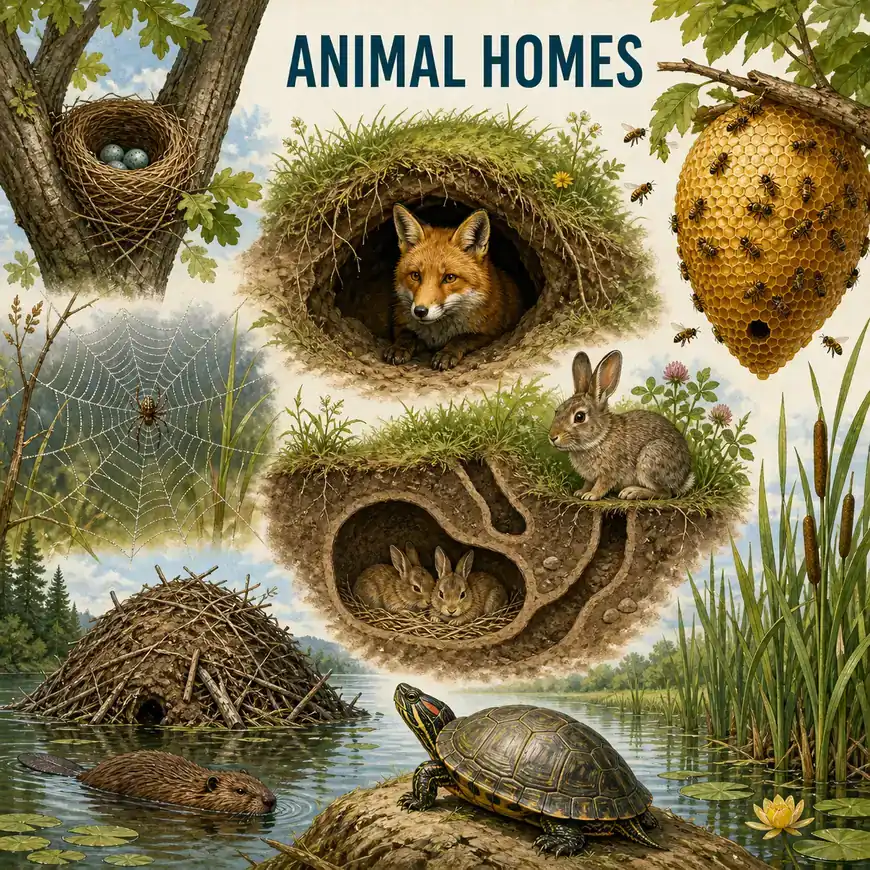
A nest, den, burrow, hive, web, shell, or lodge is a concrete home or shelter that an animal uses for resting, hiding, raising young, storing food, or surviving weather. Some animals build these places, some borrow them, and some carry their protection with them.
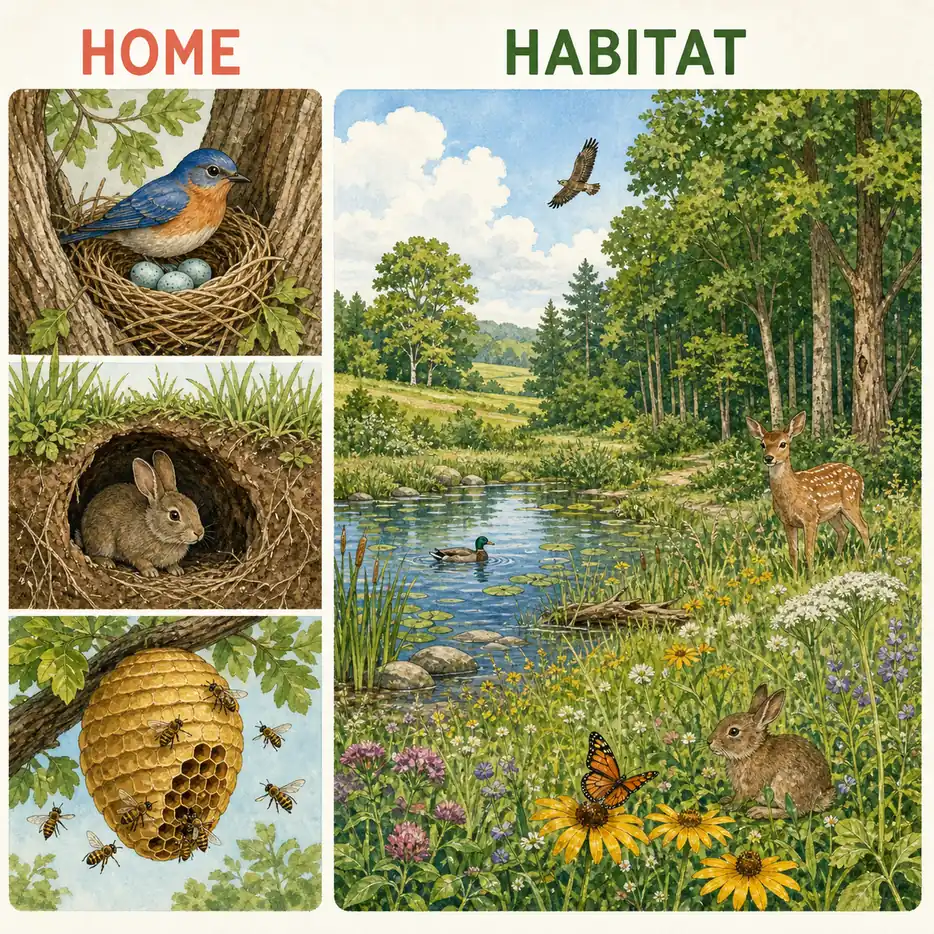
A habitat is broader. It includes the food, water, temperature, cover, space, and other conditions that let a species live. A bird's nest may sit in a forest habitat, and a rabbit's burrow may be part of a grassland habitat. The two ideas connect, but they are not interchangeable.
Animals and their homes at a glance
Use this table as a quick animal homes worksheet: cover the middle column, name the shelter, and then explain what the place helps the animal do.
| Animal | Home or shelter | What it helps with |
|---|---|---|
| Robin | Nest in a tree or shrub | Holding eggs and chicks |
| Red fox | Den, often underground | Resting and raising kits |
| Rabbit | Burrow or warren | Cover from weather and predators |
| Honey bee | Hive | Colony life and food storage |
| Spider | Web or silk retreat | Hunting and hiding |
| Beaver | Lodge beside or in water | Dry shelter with underwater access |
| Turtle | Shell carried on its body | Protection while moving |
| Clownfish | Sea anemone shelter | Cover among stinging tentacles |
Homes above ground
Above-ground homes can keep eggs and young away from wet soil, help an animal watch for danger, or turn a plant, branch, or strand of silk into useful shelter.
Robin nest
A robin builds a cup-shaped nest from plant fibers, grass, mud, and other materials. The nest supports eggs and chicks above the ground, but it is not a permanent house. Adults may use different nesting sites in different breeding seasons, and the nest works only when nearby food and cover are also available.
Weaver bird nest
Many weaver birds braid long strips of grass into hanging nests. The woven shape can make access harder for some predators and gives the eggs a protected chamber. A nest is a construction project as well as a shelter: material choice, location, and attachment to a branch all matter.
Squirrel drey
A squirrel may make a leafy drey in a tree fork, often lining it with softer material. The high position provides a resting place and can shelter young from ground-level threats. Squirrels also use tree cavities and other openings, so one animal may have more than one safe place.
Spider web
A spider web is not always a bedroom, but it can be both a hunting tool and a temporary home. Silk supports a web, anchors an animal to a surface, and may form a retreat or egg sac. Different spiders build different structures, so the word web does not describe one single design.
Orangutan night nest
Orangutans build sleeping nests from branches and leaves, usually high in the forest canopy. A new nest can provide a stable resting platform away from many ground hazards. The nest is part of a wider rainforest habitat that also supplies fruit, water, travel routes, and trees for movement.
Burrows, dens, and rock shelters
Below-ground homes buffer temperature, hide animals from predators, and create a quiet place for young. The entrance and tunnel layout can be as important as the room itself.
Rabbit burrow
Rabbits may live in a network of underground tunnels called a warren. Tunnels offer shade, stable temperatures, and escape routes, while different chambers can serve different purposes. A rabbit still needs vegetation above ground, so its home is connected to the grassland or woodland edge around the entrance.
Red fox den
A fox den is a sheltered space used for resting and raising kits. Foxes may dig their own den or reuse a burrow made by another animal. The den provides a protected base, but adult foxes often travel well beyond it to find food. Home range and den are not the same thing.
Badger sett
Badgers use underground setts with entrances and connected passages. A sett can be used by a family group and may be expanded over time. Soil type, vegetation, drainage, and nearby food influence whether the site works. Calling every animal tunnel a badger sett would erase the species-specific clue.
Prairie dog town
Prairie dogs excavate burrow systems in open grasslands. The tunnels can include chambers and raised entrances that help with drainage or visibility. A colony changes the ground around it, and those changes can affect other grassland animals. This is a useful example of a home that also shapes its habitat.
Pika rock shelter
Pikas live among rocks in mountain environments and collect plants for winter. Crevices under boulders provide shade, cover, and places to store food. The rock shelter is only one part of the animal's needs: elevation, temperature, vegetation, and snow conditions determine whether the surrounding habitat remains usable.
Homes in water and wetlands
Water can be a road, a hiding place, a nursery, or a source of building material. Wetland homes often have entrances or supports designed around changing water levels.
Beaver lodge
A beaver lodge uses branches, mud, and water to create a sheltered living space. Underwater entrances let beavers approach with less exposure, while the lodge keeps an inner area above the water line. The pond and surrounding trees are essential too, because the lodge depends on the wider wetland habitat.
Muskrat house
Muskrats can build dome-shaped houses from reeds and other wetland plants, or use banks and burrows. The structure gives cover beside shallow water. Its design varies with the local shoreline and vegetation, so a classroom example should say that muskrats may use more than one kind of shelter.
Clownfish and sea anemone
A clownfish can shelter among the tentacles of a sea anemone, whose stinging cells deter many other animals. The fish develops a relationship with the anemone rather than building a house. This is a good reminder that an animal home can be a living partner or structure in the habitat.
Alligator nest
An alligator female builds a mound nest from vegetation and soil near water. As the material decomposes, heat can help incubate the eggs. The nest location must balance warmth, moisture, flooding risk, and access to water after hatching. The same general idea does not apply identically to every crocodilian species.
Penguin colony
A penguin colony is a social breeding place rather than one small shelter. Depending on the species, penguins may use rocky ground, scrapes, burrows, or ice and snow. The colony provides proximity to other adults and chicks, while the coast and ocean provide the food and travel space the birds need.
What an animal home has to do
The same type of shelter can serve different purposes. Ask what problem the home solves before memorizing the animal-home pair.
Sea turtle nesting beach
A female sea turtle comes onto a sandy beach to dig a nest for her eggs, even though adults spend most of their lives in the ocean. The nesting site is a temporary reproductive home. Beaches, ocean currents, temperature, and safe movement routes all matter to the species.
Gorilla night nest
Gorillas make nests from leaves and branches on the ground or in trees, depending on the individual and conditions. The nest is used for a night's rest and then abandoned. A temporary home can still be important because sleep, safety, and energy affect the next day's movement.
Frog hiding place
A frog may shelter under leaf litter, in a damp crevice, among aquatic plants, or in a burrow rather than using one permanent house. Moisture and temperature are critical. For children, this is a useful reminder that an animal home can be a selected microhabitat instead of a structure.
Coral reef shelter
A coral reef is not a house built by one fish, but its branches and holes provide shelter for many animals. Small reef fish can hide from predators and find food among the structure. The reef is also a habitat, showing that one place can be both a home-like refuge and a larger ecosystem.
Whale resting area
Some whales use protected bays or calm waters for resting, nursing, or raising young, but they do not have a nest or den. This example keeps the definition flexible: a home can mean a regular safe place without implying walls, construction, or permanent occupation.
How to match an animal to its home
A memorable matching activity is strongest when the shelter, animal, purpose, and larger habitat all make sense together.
- 1
Name the exact animal
Use a species or a clear common name when a source gives one. A broad word such as bird or insect can hide very different nesting and shelter behaviors.
- 2
Name the home and its job
Ask whether the place holds eggs, protects young, stores food, reduces heat loss, hides the animal, or supports hunting. One shelter can have several jobs.
- 3
Separate home from habitat
A den is not the whole forest, and a nest is not the whole wetland. Add the surrounding food, water, climate, and cover when you explain the habitat.
- 4
Check the species and region
Nest materials, breeding seasons, and shelter names vary by species and location. Prefer a museum, zoo, university, or conservation source over an unattributed list.
A simple animal homes worksheet activity
For a quick classroom or family game, write the 25 animals on one set of cards and the homes on another. Ask learners to match them, then require one sentence explaining the job of the home. The goal is not only to remember that a rabbit uses a burrow; it is to explain why underground cover helps.
For younger children, use six familiar pairs such as bird and nest, bee and hive, rabbit and burrow, fox and den, spider and web, and beaver and lodge. For older students, add a habitat card and ask whether the home is built, borrowed, carried, shared, or temporary.
- Beginner round: match six animals to six homes.
- Explain the function: protection, eggs, young, food, rest, or hunting.
- Add a habitat card: forest, grassland, wetland, coast, mountain, or ocean.
- Challenge round: decide whether the animal builds, borrows, carries, or shares the home.
- Fact check: mark any pairing that needs a species or region caveat.
Questions about animals and their homes
What is the difference between an animal home and a habitat?
An animal home is a specific shelter, resting place, nest, den, burrow, or refuge. A habitat is the larger environment and the conditions that supply food, water, cover, space, and suitable temperatures. A nest can be inside a forest habitat.
What animals live in nests, dens, burrows, and hives?
Birds such as robins use nests, foxes use dens, rabbits use burrows or warrens, and honey bees live in hives. The exact structure and use can vary by species, season, and region, so a pairing should be treated as an example rather than a universal rule.
Is an animal home always made by the animal?
No. Some animals build shelters, some borrow cavities or burrows, some share a colony, and some carry protection. Hermit crabs use empty snail shells, owls may use tree cavities, and clownfish can shelter among a sea anemone's tentacles.
What is a simple animal homes worksheet activity?
Make two card sets: animals and homes. Match each pair, then add a third card for the larger habitat. Ask learners to explain what the home does, such as holding eggs, hiding from predators, staying dry, storing food, or resting safely.
How can climate or habitat loss change animal homes?
Flooding, drought, heat, storms, pollution, tree removal, and fragmentation can change whether a shelter remains usable or whether food and water are close enough. A careful claim names the species and region, then checks a current conservation or scientific source.
Can I use these animal-home examples for preschool learners?
Yes. Start with a small set of familiar pairs such as bird and nest, bee and hive, rabbit and burrow, and fox and den. Keep the activity concrete, use pictures or cards, and explain that real animals may use more than one kind of shelter.